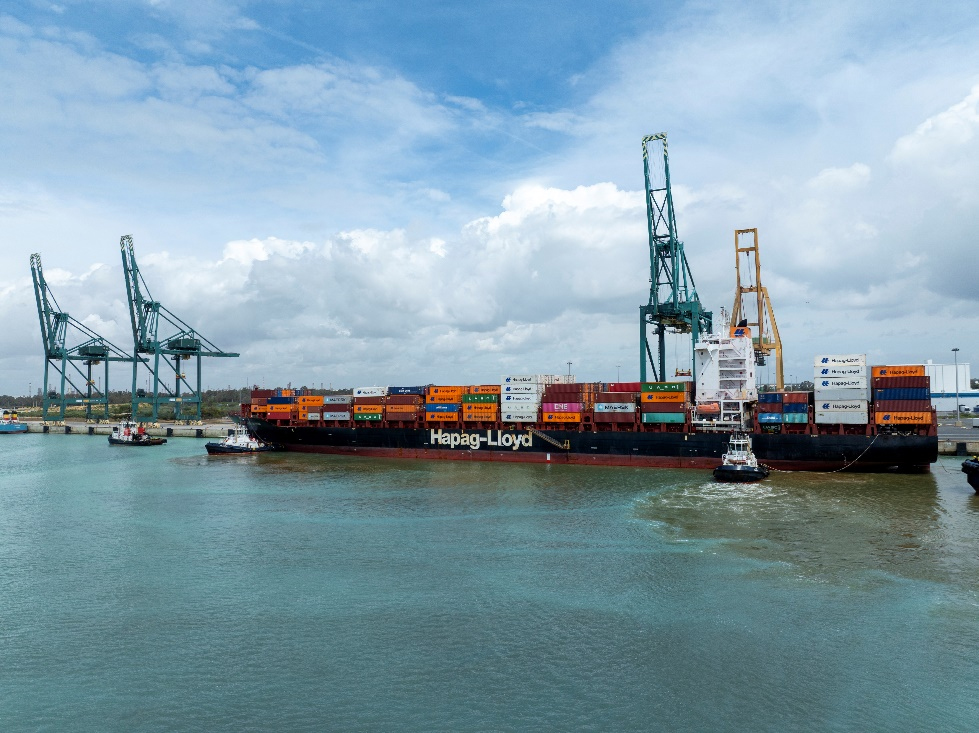
In 2025, the Spanish economy grew by 2.8% in terms of real GDP, driven mainly by domestic demand and placing the country’s performance above the Eurozone average. The cumulative CPI for 2025 was 2.9%, with interest rates supporting economic activity thanks to their decline during the first half of the year and their stabilisation until the end of the year. Activity at the Port of Huelva in 2025 developed in line with this growth, both through the management of its quays and maritime infrastructure and through the operation of the Port Public Domain, which was granted in concession and authorised to approximately 300 companies. This generated €11.84 million in occupancy fees, 2.31% more than in 2024, in addition to the continuation of its ambitious Investment Plan, investing a total of €25.29 million over the financial year.
Total turnover reached €49.51 million at the end of the financial year, an increase of 4.53% compared to the turnover in 2024. This figure also enabled the financial year to be closed with a budget execution rate of 108.21% of net turnover, slightly higher than initial forecasts due to unforeseen circumstances that positively affected the vessel and cargo rates, amongst other factors, resulting in a figure 3.6 million euros higher than anticipated.
Although there was virtually no variation in the total calculation between the invoiced amounts and those forecast in the Business Plan, significant variations have been observed in certain revenue items that require some explanatory comment.
The Occupancy Fee from concessions performed better than budgeted and compared to the previous year, growing by 2.31% compared to 2023, although it was 2.04% below budget. The planned targets for the invoicing of concession fees were met, and the differences compared to 2024 are the result of the performance and management of the Port Public Domain itself.
With regard to the activity fee, this levy is largely responsible for the growth in revenue in 2025 compared to 2024. By the end of the year, €1.17 million more had been collected than in the previous financial year, representing a 22.7% increase. The higher amount invoiced to concessions, which increased their volume of activity during 2024, has more than offset those that nevertheless recorded a lower tonnage throughput.
Ship fees have also helped to offset some of the losses incurred in other revenue streams. The cumulative total for T-1 in 2025 stands at €11.2 million, representing a 7.67% increase compared to the previous financial year.
Although the number of ships entering port has fallen, as has the total GT, specifically 38 fewer port calls than in 2024 and a reduction of 1,181,800 GT, the emergence of new traffic, including an unexpected container service and longer stays in port waters due to an adverse winter, kept this revenue item above the figures for 2024.
The remaining revenue directly associated with vessel port calls, the T0 navigation aid charge and the MARPOL collection fee, however, show decreases compared to 2024 of around -4% in both cases. This reduction does reflect the fall in the number of port calls, which stood at around -1.70% at the end of the year.
As for the T3 cargo levy, revenue ended the financial year with a 3.86% increase compared to 2024. This represented an additional revenue of €495,126 in absolute terms. Despite the decline in traffic at the end of the year (-2.57%), this increase in T3 is mainly due to the accumulated delays at the end of the 2024 financial year, which prevented the settlement of nearly €315,000 accrued in that year and which subsequently boosted the turnover for 2025.
The T-6 fee for special use of the transit area also performed well in 2025. It grew by 23.7% compared to 2024, invoicing €55,660 more than the previous year. In 2025, volumes of traditional solid bulk cargo (mineral concentrates and coal) recovered; when combined with parts and machinery also handled via the public quay without special facilities, this has resulted in increased storage volumes on the front line.
The same cannot be said for revenue from second-line quay occupancy; this tariff experienced a cumulative decrease of -5.6%, resulting in a reduction in revenue of -€44,260 compared to 2024. The decline in timber and biomass traffic, at around -56%, is responsible for the lower revenue from second-line quay storage. The decline in the traffic of steel coils and steel products in general (-15%) has also contributed to this lower revenue, as these are goods that make intensive use of the quay for both loading and unloading by ship.
Due to the increase in the variable rate applied by the Port Authority (APH) for the supply of raw water, effective 1 January 2025, an additional €206,560 was paid compared to the previous year for this item. This has resulted in an increase in this revenue of over 86%.
Furthermore, the supply of electricity increased compared to 2024, generating a total of €22,600 more in revenue. In this case, the increase is strictly due to temporary circumstances, as the APH supplied electricity to the Cold Hub via a contractor whilst the latter completed the necessary procedures to secure its own supply. Consequently, an unusually high level of consumption was invoiced, but will not continue in the coming financial year 2026. This resulted in a growth in this revenue of around 23%.
The fee for construction management, despite showing a negative trend for most of the financial year, ended 2025 with an increase of 7.3%, exceeding the 2024 turnover by some €44,000.
The fee for the use of dredging areas, however, contributed significantly to a reduction in revenue compared to last year. The APH did not provide any dredging services to third parties during the 2025 financial year, and terminal operators did not use the sites to the same extent as in previous years. This resulted in a lower revenue in absolute terms of approximately -€245,000 for this item, a decrease of 80% compared to 2024.
Within non-tariff revenue, income from compensation and damage claims showed a significant decrease of €249,189 compared to 2024. This drop in revenue stems from the exceptional sum paid out last year to a former concessionaire, which, once its concession had expired, reached a compensation agreement with the APH to restore the original condition of the premises it had occupied.
Revenue from Miscellaneous Services also contributed to the reduction in revenue compared to 2024. With a cumulative decrease of -36.7%, approximately €125,300 less was paid out than in the previous year. This decrease has a positive origin, as the greater efficiency in passing on settled property taxes to public domain authorisations allowed us to end 2024 with hardly any outstanding amounts, unlike in previous financial years. Also contributing to this decline were the lower amounts of interest paid on our contributions to the Land Accessibility Fund, as well as the exceptional sum paid last year to a supply company for a drainage project carried out by the APH, from which it benefited in part.
As regards Occupations outside the service area, the trend is also negative compared with 2024. There has been a decrease compared with the same period last year (-12.8%), resulting in a reduction in revenue of €76,656. This decrease is not due to an actual loss of this type of occupancy, as revenue from this source has remained very stable for years. The reason for this difference lies in the Majarabique Terminal, which is conceded to and operated by a terminal operator. Unlike the others, this occupancy was contractually agreed to be settled at the end of each six-month period; depending on the year, there are occasions when the final settlement is issued within the financial year in which it accrues and other occasions when it is not, which is why this difference sometimes arises.
As for enforcement surcharges, these have increased again compared to 2024, in this case by almost 80%. Although an increasingly high percentage of clients have opted for direct debit for the payment of their fees, some of the port’s largest concessionaires have not wished to avail themselves of this method and continue to pay their half-yearly concession invoices after the due date, thereby incurring substantial surcharges. These amounts have generated additional revenue for the APH of around €55,000 compared to 2024.
In addition to the income items mentioned above, it is worth highlighting the financial income item, which includes income generated by cash positions, as well as interest on late payments, enforcement proceedings, deferrals and loans. With regard to the first item, the fall in market interest rates had a negative impact, although it did allow an average return on cash holdings of 2.52%, with a total income of €3.77 million, compared to €5.08 million in the 2024 financial year.
As for operating expenses, including depreciation and amortisation, these amounted to €49.85 million, compared to €46.51 million in 2024, representing an increase of 7.19%. These can be attributed both to a 9.67% rise in staff costs due to salary reviews and the recruitment of new staff, and an 8.62% rise in other operating expenses, mainly due to dredging costs that were not incurred in 2024, as well as depreciation and amortisation, which rose by 4.19% due to the completion of the depreciation period for certain assets.
Among the items under other operating expenses, which increased by €1,588,945 (8.62%), repair and maintenance costs stand out significantly, with an increase of €2,648,831, mainly due to the fact that no maintenance dredging was carried out in 2024, whereas in 2025 this amounted to €2,605,630. This increase was partially offset by lower expenditure on independent professional services, which fell by €645,423 compared with 2024, and on supplies and consumables, which fell by €673,213 compared with 2024, in particular lower expenditure on electricity.
With regard to other external services, expenditure was similar to that of the 2024 financial year, with minor variations across all items, none of which stood out in particular.
Compared to the approved budget, the personnel expenditure item was 9.58% lower than forecast, representing a reduction of €1,257,646.84, due to the lower-than-expected recruitment of staff and the delegated payment of Social Security contributions. The ‘other operating expenses’ item was 17.58% lower, with a reduction of €4,271,181.40, largely due to the non-execution of maintenance works such as the repair of the South Quay, the repair of joints on the Tinto Bridge and the demolition of some buildings in poor condition.
It is important to note that the inter-port compensation fund contribution amounted to €1,509,000.00, which is included under operating expenses, whilst the amount received was €291,000.00, recorded as other operating income, resulting in a net contribution of €1,218,000.00.
The pre-tax profit for 2025 stood at €8.66 million, compared to €11.14 million in 2024. The effect of corporation tax was positive due to the utilisation of tax credits, increasing the final profit for the financial year by €1.9 million, resulting in a final profit for the financial year of €10.65 million, compared to €12.48 million the previous year, when unclaimed tax credits were also recorded.
The target annual return, which excludes income and expenses that distort the result, including corporation tax, stands at 2.11%, lower than the previous year’s 2.73%, reflecting the lower profit for the financial year and the increase in average assets following the inclusion of works completed under the Investment Plan.
The standard liquidity ratios demonstrate that there is ample capacity to meet debts; in particular, the quick ratio to cover current liabilities stands at 8.16. This ratio, as in 2024, remains very high as a result of substantial cash holdings in a well-remunerated current account, since on other occasions available cash is usually invested in more profitable financial products, which require lower liquidity and are selected based on the extra yield and cash flow forecasts.
During 2025, when cash flows from operations amounted to €24.64 million and outflows increased due to greater construction activity and a rise in long-term financial products compared to 2024, there was a decrease in working capital of €9.46 million, bringing it to €134.41 million.
The ratio of operating expenses to operating income in 2025 was 91.06%. For the coming financial years, taking into account the depreciation of new investments made, this ratio is expected to remain high; therefore, we anticipate that EBITA will remain at levels of around €19 million, similar to figures throughout the financial years covered by the Business Plan, thereby ensuring financial stability.
On another note, it is worth noting that the Balance Sheet presents a very solid financial and equity position. Fixed assets are financed entirely by equity, and there is no long- or short-term debt other than that arising from the normal operations of the Entity.
On the liabilities side, equity accounts for 95.75% of the total and, given that the working capital is very ample, the organisation is meeting its payment commitments without any problems. In this regard, it should be noted that the average payment period to suppliers of 30 days, as established in the Law on Combating Late Payment, is being met, standing at 14.67 days in 2024.
Return on assets (E_01)
In accordance with the definition in Article 157 of RDL 2/2011, return on assets, expressed as a percentage of profit for the year relative to average total assets, is as follows:
| 2023 | 2024 | 2025 | |
|---|---|---|---|
| Adjusted result for the year (€) | 11,294,269 | 12,316,389 | 9,881,288 |
| Total assets (as per art.157 RDL 2/2011) (€) | 452,568,893 | 451,421,293 | 468,037,507 |
| Ratio (%) | 2.50% | 2.73% | 2.11% |
EBITDA evolution (E_02)
The trend in EBITDA expressed in euros, total tonnes handled, the EBITDA-to-tonnes-handled ratio and the percentage change in EBITDA compared with the previous financial year is as follows:
| 2023 | 2024 | 2025 | |
|---|---|---|---|
| EBIDTA (€) * | 18,888,080 | 19,153,416 | 18,719,304 |
| % change in EBIDTA * | -10.57% | 1.40% | -2.27% |
| Tonnes moved | 30,085,963 | 31,110,070 | 30,310,150 |
| Ratio EBIDTA/Tm | 0.63 | 0.62 | 0.62 |
*) As of 1 January 2022, grants from European funds will not be taken into account.
*) Data without subsidies from European funds has been used to calculate the change in EBITDA compared to the previous year.
Debt service (E_03)
Fixed assets are financed entirely from own funds, and there is no long- or short-term debt other than that arising from the Entity’s normal operations. All potential contingencies arising from non-payment are adequately provisioned. As regards liabilities, it should simply be noted that the Entity is meeting its payment obligations as normal and that existing debts arise from the normal course of business. In short, there is no debt and debt service is zero.
| 2023 | 2024 | 2025 | |
|---|---|---|---|
| Debt repayments | 0 | 0 | 0 |
| Interest on debt | 0 | 0 | 0 |
| Sum | 0 | 0 | 0 |
| Cash flow (€) | 25,007,333 | 25,897,176 | 24,647,584 |
| Ratio (%) | 0.00% | 0.00% | 0.00% |
Inactive assets (E_04)
Dormant assets, defined as land and natural resources that have been dormant for the last three years and which may be put to economic, social or environmental use, are:
| 2023 | 2024 | 2025 | |
|---|---|---|---|
| Land with no activity | 38,869,065 | 46,511,183 | 45,617,441 |
| Total assets (as per art.157 RDL 2/2011) (€) | 452,568,893 | 451,421,293 | 468,037,507 |
| Ratio (%) | 8.59% | 10.30% | 9.75% |
Changes in operating income and expenditure (E_05)
The trend in operating expenses relative to operating income over recent years is as follows:
| 2023 | 2024 | 2025 | |
|---|---|---|---|
| Operating costs (€) | 45,910,468 | 46,497,292 | 49,850,537 |
| Operating income (€) | 51,721,859 | 52,578,281 | 54,747,127 |
| Ratio (%) | 88.76% | 88.43% | 91.06% |