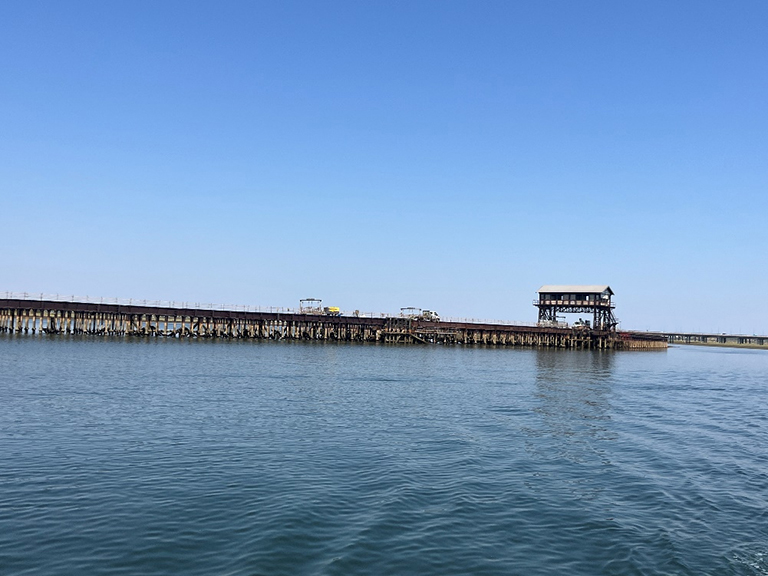
Natural areas in the vicinity of the port of Huelva (A_26)
The Port of Huelva is situated in an area of great environmental and biological richness, with a number of protected natural areas adjacent, or even within the Service Zone, covering a total area of approximately 12,000 hectares, of which 560 are included within the Port of Huelva Service Zone.
These areas have various protection statuses, such as: Natural Area, Nature Reserve, Biosphere Reserve (MAB Programme), Wetlands of International Importance included on the RAMSAR List, Special Protection Areas for Birds (SPAs) and Sites of Community Importance (SCIs), and are listed below:
| Name | Type of space9 | Distance to the port10 |
|---|---|---|
| Marismas del Odiel Natural Site | MAB, RAMSAR, ZEPA, LIC | Partially included |
| Paraje Natural Estero Domingo Rubio | ZEPA, LIC | 0 Km |
| Laguna de Palos and Las Madres Natural Site | RAMSAR, LIC | 3.2 Km |
| Isla de Enmedio Nature Reserve | MAB, RAMSAR, ZEPA, LIC | 1 Km |
| Marismas del Burro Nature Reserve | MAB, RAMSAR, ZEPA, LIC | 0 Km |
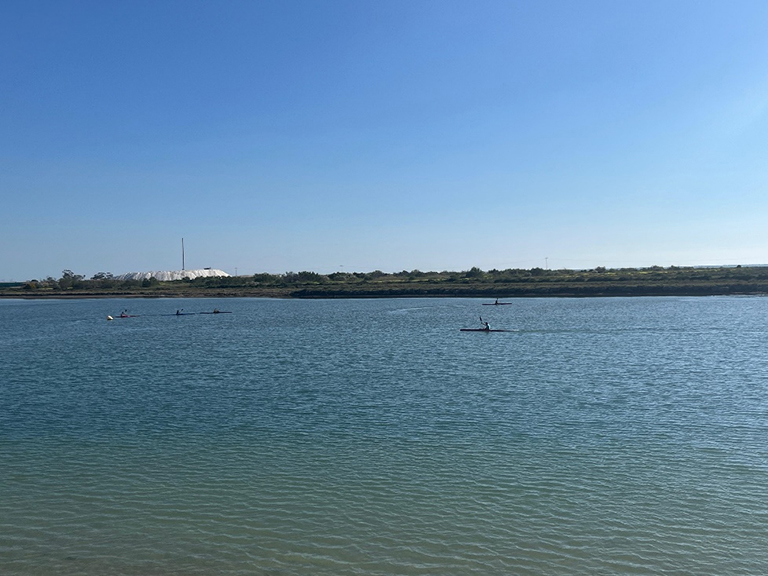
Among these areas, the Marismas del Odiel Natural Area stands out for its environmental value and size (6,631 ha); it has been designated a Biosphere Reserve, a Special Protection Area (SPA) and a Site of Community Importance (SCI), and is included on the Ramsar List.
This site is partially included within the Port Service Area, covering an area of 562 hectares, specifically on the right bank of the Odiel estuary where there are virtually no port operations. There is, therefore, a close link between the management of this natural area and the Port Authority, which forms part of its Board of Trustees.
The ecological value of the Marismas del Odiel Natural Area lies in its estuarine, tidal and inland marsh ecosystems, as well as highly productive coastal sandbank ecosystems, which constitute a strategic site for the nesting and rearing of migratory birds and are home to a wide variety of habitats and landscapes.
Designated a Biosphere Reserve since 1983, the Marismas del Odiel Natural Area is a habitat for protected species such as the spoonbill, grey heron, purple heron, marsh harrier, osprey, flamingo, black stork and otter, amongst others.
9) SCI, ZEPA, RAMSAR Wetland, Asset of Cultural Interest (BIC), etc.
10) Means the distance to the physical port, i.e. land area and I-zone. When wholly or partly within, indicate: included or partly included, as appropriate. Where it is adjacent, this shall be indicated: 0 km.

Schematic description of projects for the regeneration of the natural environment undertaken by the Port Authority, and valuation in euros of the cost of these actions (A_28)
| Landscape improvement actions | |
|---|---|
| Name | Connection of the Riotinto loading quay |
| Place | Riotinto Quay, Huelva. |
| State | Status in 2025: completed |
| Year | 2024–2025 |
| Reason | Connection of the ore loading quay of the former Rio Tinto company |
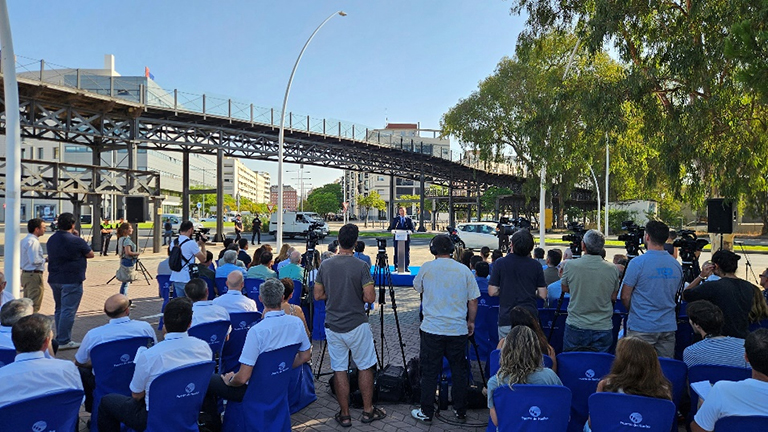
| Description | Construction of the Rio Tinto Company’s jetty, which in the 19th century belonged to a British business group (The Rio Tinto Company Limited), began in approximately September 1874. Due to the boom in industrial activity and the increase in road traffic, in the 1960s work began on dismantling the structure, prioritising the arches in the 50-metre section that linked the landward part with the section extending into the estuary, which featured two large arches allowing the passage of the railway line to Punta del Sebo and the road heading in the same direction. Given its importance and significance in the history of Huelva and its port, on 18 March 2023, the Rio Tinto Company’s ore wharf was declared a Site of Cultural Interest, in the monument category (Decree 73/2003, BOJA No. 65, 04/04/2003). The work carried out on the old ore loading bay involved joining the two existing sections at their upper level by installing a deck consisting of two metal lattice girders similar to the existing ones, supported by two new porticoes with columns founded on micropiles. The decking of the new section consists of GRP (Glass-Reinforced Polyester) slats, similar to those already installed around the quay. The handrail of the new section consists of vertical frames similar to the existing ones and round connecting elements; it has been fitted with safety glass to prevent objects from falling onto the road and to comply with safety recommendations. |
| Investment and expenditure in € | €586,685.69 |
| Landscape improvement actions | |
|---|---|
| Name | Tharsis Quay Refurbishment |
| Place | Tharsis Quay |
| Status | Development status in 2025: in progress |
| Year | 2022–2026 |
| Reason | In 2025, work continues at the Port of Huelva to maintain and restore our architectural heritage. |
| Description | This project involves the structural restoration of the property known as the Loading Quay of the Spanish Tharsis Mining Company in the Port of Huelva, listed in the General Catalogue of Andalusian Historical Heritage as a Monument. This quay has been declared a Site of Cultural Interest, establishing its protection regime under Law 16/1985 of 25 June on Spanish Historical Heritage. The Loading Quay of the Compañía Española de Minas de Tharsis forms part of the body of civil and industrial engineering works carried out in the province of Huelva during the second half of the 19th century as a result of the development of mining activity, following the boom in the exploitation of mines located in the Mining Basin and the Andévalo region. |
| Investment and expenditure in € | €2,392,641.71 |