
Estimated total number of direct jobs generated by maritime freight terminals, passenger terminals and companies providing port services (S_19)
Huelva Port Authority conducts socio-economic impact studies every two years. As a new development, Puertos del Estado has developed a new methodology for carrying out this type of study with the aim of standardising the studies across the Port System. Furthermore, the Port Authorities of Andalusia are keen to have impact studies to understand the contribution of port activity to the Andalusian economy. During 2025, coordination efforts took place to address the aforementioned circumstances, whilst work began on the new 2024 Port of Huelva impact study.
Requirement for preventive and safety measures (S_20)
2025 was a year of consolidation and maturity in the management of safety and the coordination of business activities at the Port of Huelva.
The Port Authority has continued to advance a preventive model fully integrated into its operations, strengthening the supervision of construction works, services and port operations, and maintaining constant dialogue with the companies operating within the service area.
This sustained effort has made it possible to keep accident rates very low, falling below the figures recorded in previous years, with no serious accidents occurring at works under the direct supervision of the Department of Safety in Works and CAE.
The work carried out during the year was characterised by the effective application of the Business Activities Coordination Procedure, which has been adapted over previous years to the port regulatory framework and to the guidelines derived from the report by the State Legal Service. This framework has enabled the differentiated management of the various concurrent situations arising in the port, ranging from the provision of general and port services to activities carried out in concessionary or non-concessionary areas, as well as works and services directly promoted by the Port Authority. The correct identification of each situation has facilitated more precise coordination and supervision better tailored to the characteristics of each activity.
In this context, and in accordance with the procedures established for CAE at service quays, as well as in compliance with Article 65 of the Consolidated Text of the Law on State Ports and the Merchant Navy (TRLPEMM), it is established that the ship’s agent acting on behalf of the ship-owner is responsible for ensuring compliance with CAE obligations during the vessel’s stay in port. This responsibility covers all activities carried out on board and in the vicinity of the vessel, except for the loading, stowing, unstowing, unloading or transhipment of goods, as well as the embarkation or disembarkation of passengers. In these specific cases, responsibility for the CAE lies with the stevedoring company, which directly carries out the aforementioned operations. The stevedoring company must coordinate with the other companies and workers involved in these activities, ensuring the health and safety of all those involved.
Mechanisms for the coordination of business activities (S_21)
Huelva Port Authority has fully complied with the obligations set out in Royal Decree 1627/1997, which requires the preparation of the relevant health and safety studies, the appointment of coordinators during the design and execution phases, and the adoption of the necessary measures to ensure the protection of all workers involved. Throughout the financial year, this work was continuously monitored with regular site visits, verifying the effective implementation of the planned preventive measures, the adequate control of risks, and compliance with the safety conditions set out in the studies and works plans. This monitoring confirms that the work took place in safe conditions and in accordance with the applicable legal requirements.
Smaller-scale activities, which do not fall within the scope of Royal Decree 1627/1997, were also monitored. The prior verification of preventive documentation and site visits conducted during the works made it possible to maintain an adequate level of safety in maintenance work, services and minor interventions that are routinely carried out at port facilities.
With respect to company accreditation, 2025 saw a steady trend. This volume reflects ongoing contracting activity and the need for a business sector equipped to operate in a complex port environment. Documents were managed electronically, enabling agile and up-to-date monitoring of the safety requirements imposed on contractors.
Coordination prior to the start of works remains an essential element in ensuring safety during activities carried out in the port. Advance notification of planned works, together with the verification of safety documentation, has enabled proper planning of operations and ensured that companies have the necessary human and material resources to work in safe conditions.
During the execution of works, the on-site presence of the Department of Construction Safety and CAE has been constant, with regular visits making it possible to confirm compliance with safety regulations, the suitability of personnel and equipment used, and allowing any detected deviations to be corrected immediately.
The coexistence of activities carried out by the Port Authority and by concessionaires or authorised companies continues to require close coordination. The coexistence of facilities managed directly by the Port Authority, concession areas and common-use zones has required constant cooperation among the various operators to ensure the safety of all personnel carrying out their activities within the port area.
Smooth communication between the parties and the clear identification of responsibilities have enabled the effective management of interactions arising from the concurrence of activities.
To achieve these objectives, the APH’s Department of Construction Safety and CAE has utilised various mechanisms and means, including:
- Regular meetings.
- Exchange of Information.
- Specialised computer applications.
- Contracting of specialist firms.
- Drafting of instructions and procedures.
The APH’s commitment to occupational health and safety remains a cornerstone for ensuring a safe, efficient and sustainable port environment.
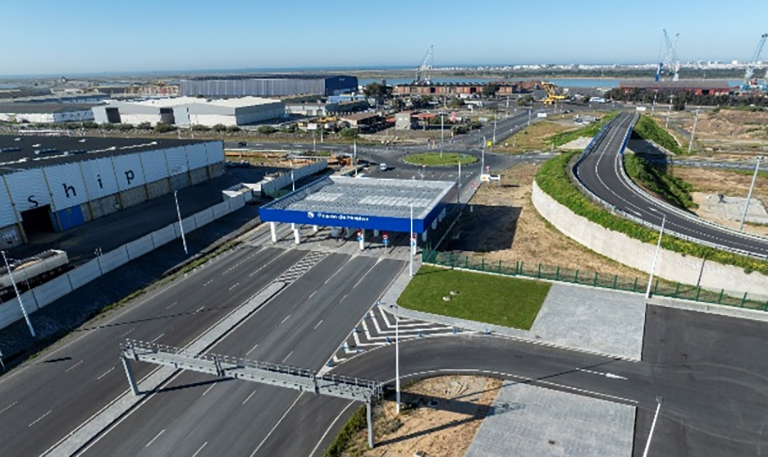
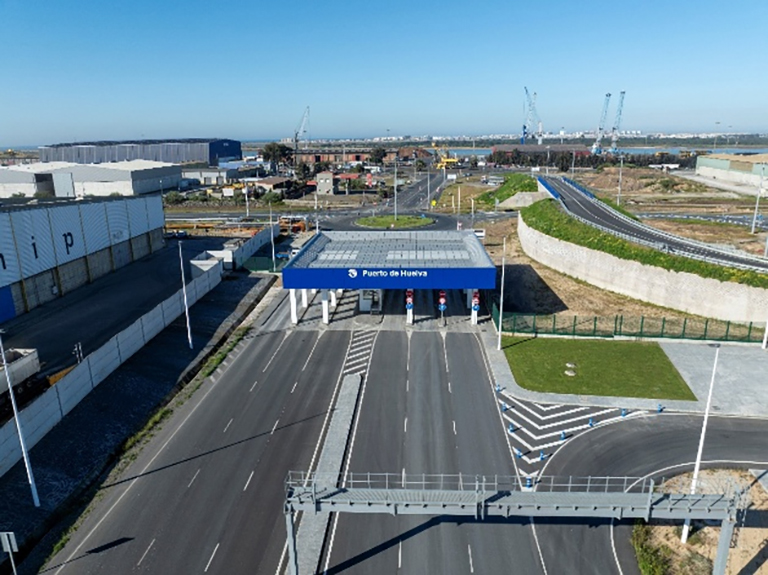
Total number and percentage of maritime freight terminals and maritime passenger terminals under concession or authorisation as well as companies licensed or authorised to provide port or commercial services with OHSAS (S_22)
| Total number and percentage of maritime terminals and service companies that have implemented an OHSAS or ISO 45.001 occupational risk prevention system | |||
|---|---|---|---|
| Type of terminal/ service | Total no | No with Oshas/45001 | % with EMS |
| Freight terminal | 6 | 6 | 100% |
| Passenger terminal | 1 | 1 | 100% |
| Stevedoring service | 8 | 5 | 63% |
| MARPOL Service | 2 | 2 | 100% |
| Nautical technical service (pilotage, towing and mooring) | 3 | 2 | 67% |
| Port Services (other) | 50 | 31 | 62% |
Security and safety training measures for the port community (S_23)
Training and security initiatives have been limited to joint exercises and drills carried out in both the safety and security domains.