
General technical characteristics of the port (I_07)
One of the priority functions of Huelva Port Authority is to optimise the layout and condition of its infrastructure so that it adequately meets the needs of its customers.
The general characteristics of the Port of Huelva are as follows:
It is situated at the confluence of the Tinto and Odiel rivers, and its land service area covers 1,784 hectares, with 524 hectares of land available for concession. This Service Area is bounded on its right bank by the 13-kilometre-long Juan Carlos I sand containment dyke, and on its left bank by the two port areas of which it is composed: the Inner Port and the Outer Port.
Within the Inner Port, there are two distinct areas for port, industrial and commercial uses:
- The Levante Quay area and the North Fishing Zone, where the main uses are general cargo traffic, shallow-draught cruise ships, the fishing industry, commercial and service facilities, and machinery maintenance and storage facilities.
- The Punta del Sebo cross-docks area, where, until very recently, the main uses were the basic chemical industry and activities complementary to this industry. Given the reduction in the number of factories dedicated to the basic chemical industry, auxiliary industries are gradually being established. Close to these facilities lie the Marismas del Tinto, an open space where measures have been taken to restore and enhance it.
Similarly, the Outer Harbour also has distinct areas differentiated by the type of activities:
- The area around the Ingeniero Juan Gonzalo Quay and its surroundings, primarily used for solid bulk cargo.
- The area of licensed jetties, primarily intended for energy-related liquid bulk traffic.
- The South Quay, dedicated to container, passenger, Ro-Ro and general cargo traffic.
- In Zone II of the port waters, single buoy mooring is used for the loading and unloading of crude oil.
As regards navigable areas, the navigation channel is particularly noteworthy; its most relevant characteristics are detailed in the attached table:
| Situation | |
|---|---|
| Longitude (Greenwich) | 6º 49’ 32.8” W |
| Latitude | 37º 8’ 6.6” N |
| Tides | |
|---|---|
| Maximum tidal range | 3.87 |
| B.M.V.V.E. elevation to port zero | 0.1 |
| E.M.V.P. elevation with respect to port zero | 4.18 |
| Prevailing winds | |
|---|---|
| SW and NW | |
| Entrances | |
|---|---|
| Input channel | |
| Width | 200 to 300 m |
| Project draught in B.M.V.E. | 13 m |
| Nature of sea bed | Sands and sludges |
| Length | 22,000 m |
| Inlet | |
| Orientation | 339º |
| Width | 300 m |
| Project draught | 13 m1 |
| Maximum current recorded | 5 knots |
| Shelter dams | |
|---|---|
| Juan Carlos I Dam | 13,000 m length |
1) Project draft. The actual draught at any given time shall take into account the minimum sounding corresponding to the last bathymetric survey and shall be consulted through the authorised agents.
The following table summarises the characteristics of the quays and terminals that the Port Authority of Huelva, as a provider of port infrastructures, places at the service of maritime trade.
| Piers, jetties and moorings | Length / Maximum length (m) | Project draught (m) * | Width (m) | Jobs |
|---|---|---|---|---|
| Service | ||||
| Ingeniero Juan Gonzalo Quay | 942 | 13.00 | 230 | General cargo and bulk |
| Ciudad de Palos Quay | 492 | 13.00 | 320 | General and bulk goods |
| Levante South Quay | 400 | 8.00 | 80 | General cargo and passenger |
| Levante Centre Quay | 90 | 8.00 | 80 | Local and ancillary fare |
| Levante North Quay | 710 | 8.00 | 80 | Fisheries and inland traffic |
| Arenillas Tower Oil Tanker Quay | 460 | 12.60 | --- | Liquid bulk (2 berths) |
| Ore Quay | 374 | 13.00 | 50 | General cargo and bulk |
| South Quay | 1,282 | 13.00 | 300 | Passenger, general cargo, Ro-Ro and containers |
| Tharsis Quay | 280 | --- | --- | Out of service |
| Mooring buoys North | 200 | 7.00 | --- | --- |
| Mooring buoys Centre | 200 | 6.00 | --- | --- |
| Mooring buoys South | 150 | 5.00 | --- | --- |
| Total service | 5,580 | |||
| Private | ||||
| New Huelva Shipyard Quay | 337.00 (**) | --- | Outfitting, repair, scrapping | |
| Riotinto quay | 390.00 (**) | --- | Out of service | |
| Fertiberia, S.L. (Phosphoric acid/compounds) jetty | 180.00 | 8.10 | Liquid bulk | |
| Atlantic Copper, S.L.U. jetty North | 140.00 | 6.50 | Liquid bulk | |
| Fertiberia, S.L. (Fertiliser) jetty | 150.00 | 8.10 | Liquid and solid bulk | |
| Impala Terminal | 550.00 (**) | 14.00 | Bulk solids | |
| Levantino-Aragonesa de Tránsitos, S.A. | 120.00 | 9.70 | Liquid bulk | |
| Atlantic Copper, S.L.U TNP 1 jetty | 175.00 | 10.00 | Liquid bulk | |
| Atlantic Copper, S.L.U. jetty TNP 2 | 159.00 | 8.00 | Liquid bulk | |
| Saltés quay | 200.00 | 5.50 | Outfitting. repair and scrapping | |
| Reina Sofía E de MOEVE jetty | 190.00 | 10.00 | Liquid bulk | |
| Reina Sofía C de MOEVE jetty | 128.00 | 8.50 | Liquid bulk | |
| Reina Sofía W de MOEVE jetty | 150.00 | 9.00 | Liquid bulk | |
| Reina Sofía 4º MOEVE BERTH jetty | 210.00 | 12.60 | Liquid bulk | |
| Enagas, S.A. jetty | 304.50 | 12.00 | Liquid bulk | |
| Decal North jetty | 210.00 | 11.50 | Liquid bulk | |
| Decal South jetty | 210.00 | 12.50 | Liquid bulk | |
| Decal-South 2 jetty | 188.00 | 13.30 | Liquid bulk | |
| Royal Maritime Club of Huelva | 16.00 | 2.00 | Various | |
| Marina del Odiel (Port and Marina Management Company) | 40.00 | 2 - 5 | Various | |
| La Rábida quay | 20.00 | 2.00 | Auxiliary (1 berth) | |
| Monobuoy | 275.00 | 16.50 | Liquid bulk | |
| Total private | 4,342.5 | |||
| Total | 9,922.5 |
(*) The actual draught at any given time shall be that of the minimum sounding corresponding to the last bathymetric survey carried out and shall be consulted through the authorised consignees 2644.
(**) Total length of wharf.
The main road access routes to the Port of Huelva are via the A-49 motorway (Seville-Huelva-Portugal), via the N-441 (from the north), the H-31 (from the east) and the H-30 (Huelva Eastern Ring Road), which extends southwards as the N-442, providing access to the Outer Port. The N-435 (from Badajoz and Zafra to Huelva) connecting with Extremadura is also of importance for the Port of Huelva.
Via the link to the main network, the Outer Port of Huelva is connected by rail from its railway terminal at the South Quay to the Huelva Mercancías railway terminal, a rail logistics hub from which goods are dispatched, received and sorted. From Huelva Mercancías, the Port of Huelva has access to the Huelva-Zafra and Huelva-Seville railway lines. Since December 2016, there has been a port terminal in Majarabique that serves as a hub for distributing traffic to the rest of the Spanish and European rail network.
Infrastructure under implementation or project and purposes served (I_08)
During 2025, Huelva Port Authority invested 25.2 million euros to adapt its infrastructure to current needs.
The following major projects were completed in 2025:
- Refurbishment to ensure the structural stability and safety of the Tharsis Spanish Mining Company’s cargo quay.
- New Ro-Ro platform on the south quay of the Port of Huelva
- Fishing jetty at the Levante Norte Quay
- Connection of the ore loading quay of the former Riotinto company
A brief description of these projects is provided below:
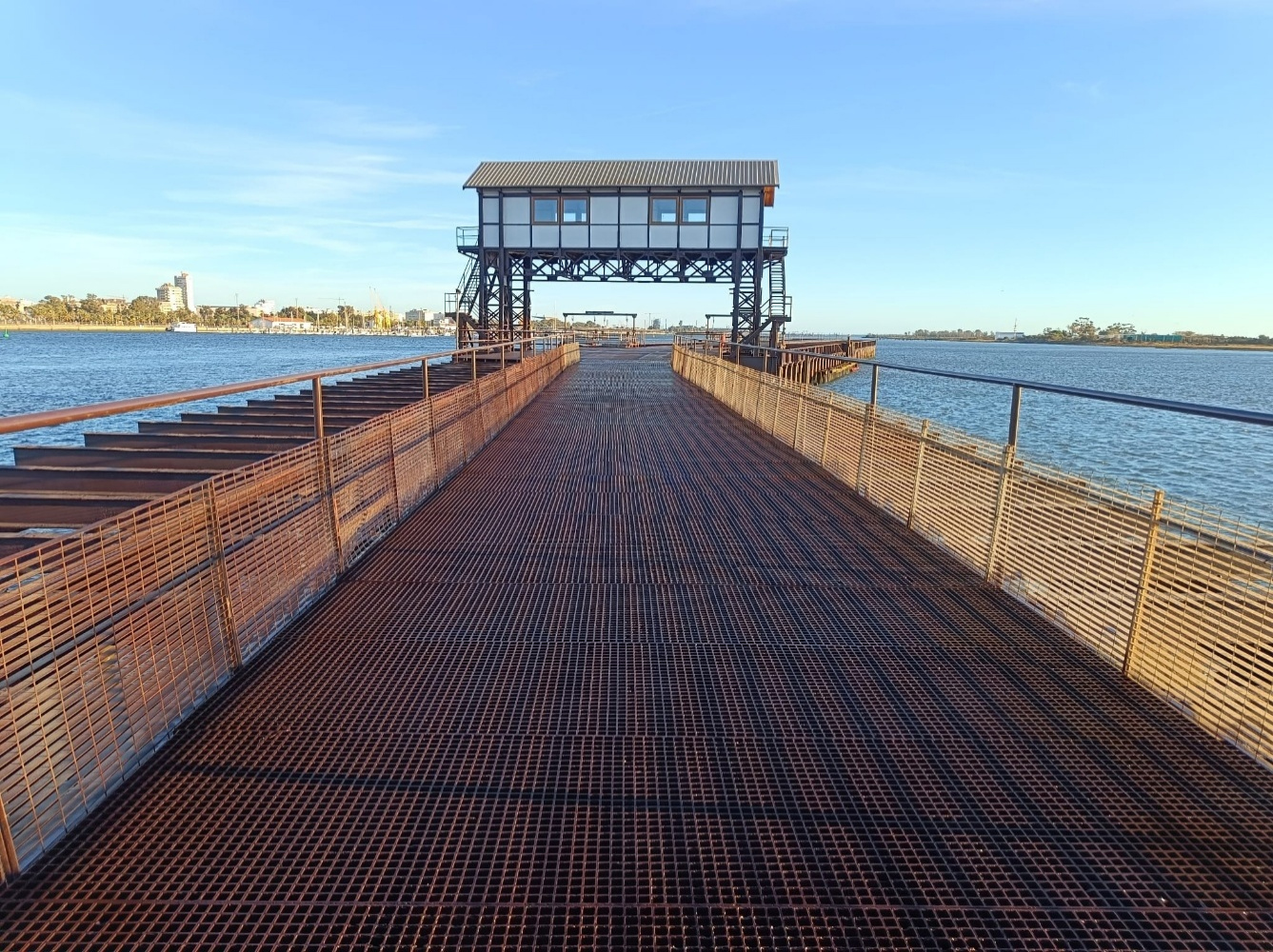
1. Refurbishment to ensure the structural stability and safety of the Tharsis Spanish Mining Company’s loading quay
The loading quay of the Spanish Tharsis Mining Company is an important symbolic landmark for the city of Huelva, due to its significant role in the economic and social development of the area and its links to the city’s recent history. It is a hallmark of the city’s identity, and the public called for its rehabilitation.
The works involved a series of measures necessary to ensure the structural stability and safety of the Loading Quay, as the quay was in a highly advanced state of deterioration.
2.New Ro-Ro Platform at the South Quay of the Port of Huelva
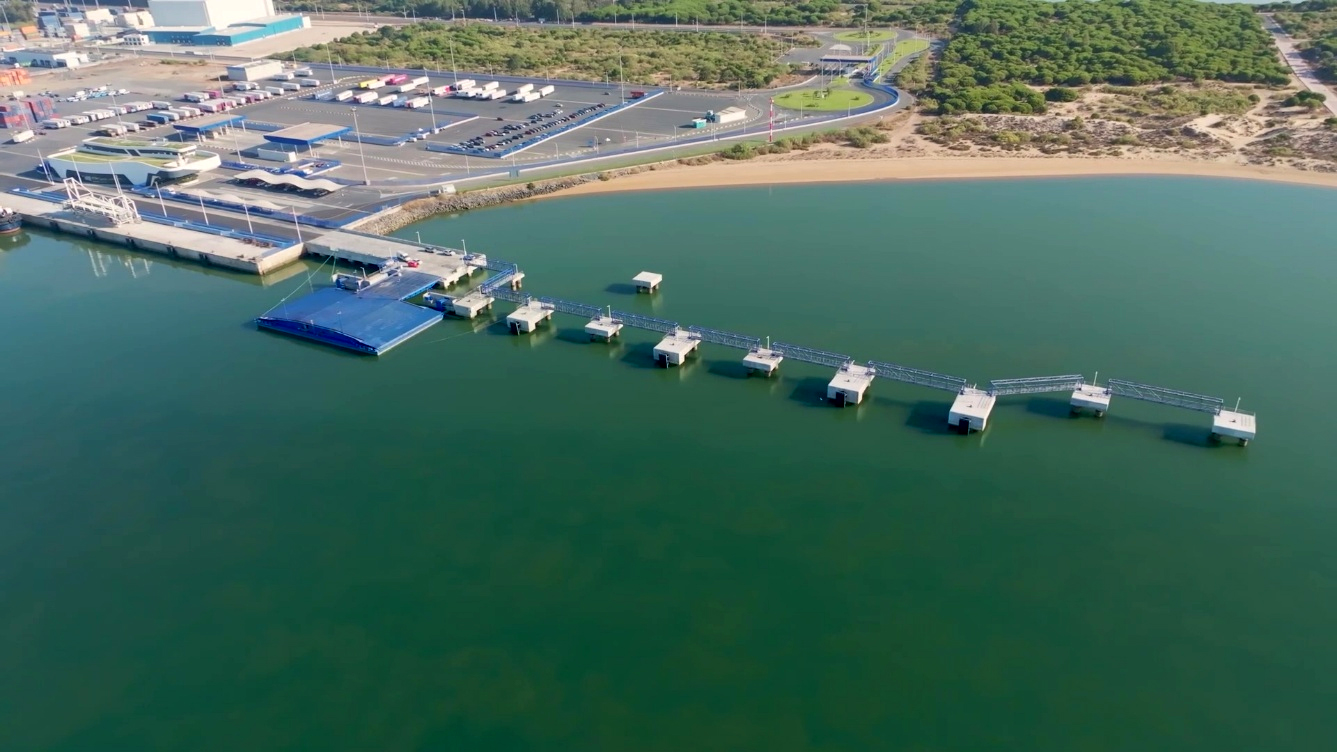
Much of the loading and unloading at the South Quay is carried out using rolling stock via gangways located at the stern of the vessels. The quay had a ramp for Ro-Ro vessels 200 m from the southern end, with capacity for two vessels, allowing for the operation of vessels approximately 175 m in length and 27 m in beam.
Due to the recent increase in this type of traffic, following the introduction of a new regular service to the Canary Islands, and given the forecasts for growth and the introduction of new regular roll-on/roll-off services to North Africa, the operability of the quay required improvement. This involved the construction of a new Ro-Ro ramp at the southernmost end of the quay, compatible with the existing ramp, such that up to four Ro-Ro vessels can be handled simultaneously in the future.
3. Fishing jetty at the Levante Norte Quay
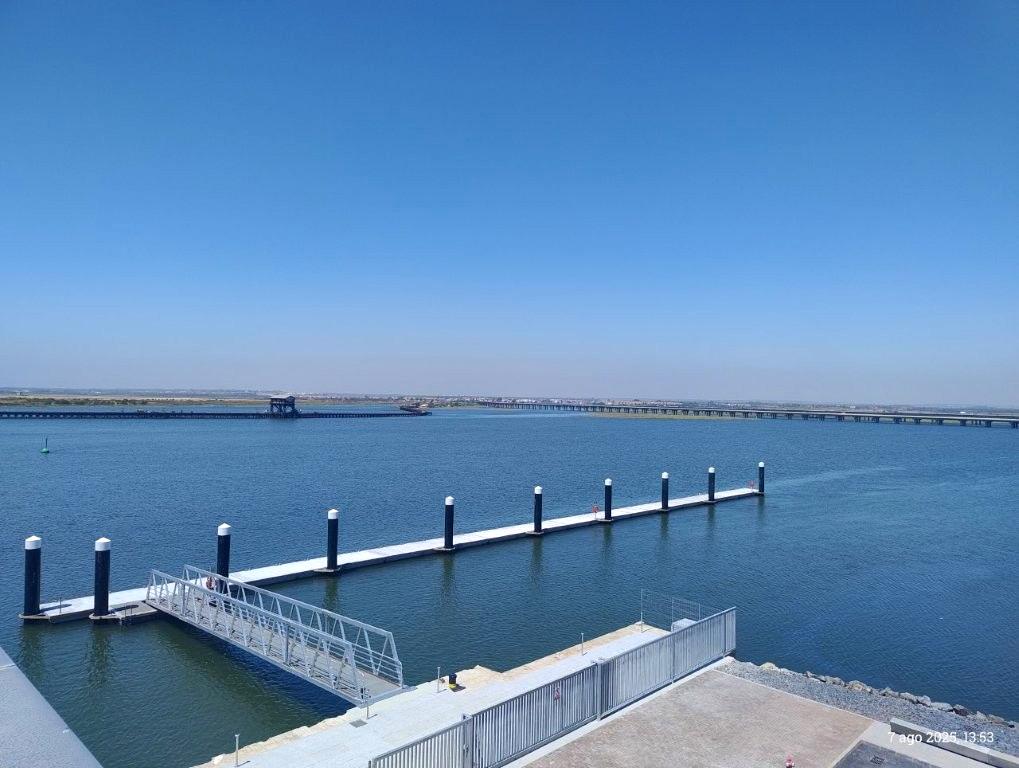
A new jetty has been designed to meet the excess demand for mooring fishing vessels at the Levante Norte Quay in the Port of Huelva, involving the extension of the mooring line by 96 metres opposite the Port’s Fishing Wharf. Only the front face of the jetty (the side furthest into the estuary) is designed as a berthing line, to ensure sufficient draught for the larger vessels operating there and provide the necessary space for manoeuvring.
The solution adopted involves the construction of a pile-supported floating concrete jetty starting 1 metre from the bottom step of the existing stairs leading up to the quay, so as not to interfere with their use. The infrastructure has eight floating concrete modules measuring 12×3 m and another intermediate floating aluminium jetty measuring 6×3 m, which will serve as a support for the gangway and provide the transition to the access point for the floating mooring jetty.
4. Connection of the ore loading quay of the former Riotinto company
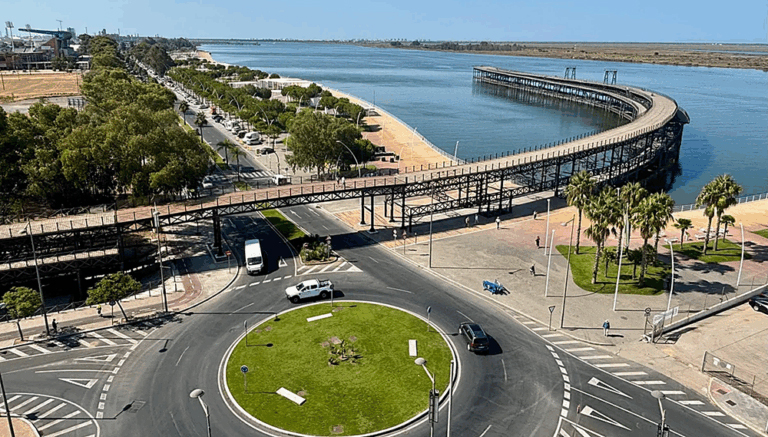
The dismantling of the bridge over Avenida Francisco Montenegro in the 1970s split the excellent pedestrian route linking Huelva and its estuary into two. As part of the port-city initiatives being carried out by APH, the aim was to restore the connection and join the two sections of the Riotinto Company’s loading quay, a Site of Cultural Interest (BIC) and a symbol of the city of Huelva.
The project involved joining the two existing sections at their upper level, allowing heavy traffic to flow along one of Huelva’s main thoroughfares, Francisco Montenegro Avenue. The aim was not to faithfully recreate the quay’s original design, but to create a functional structure that integrates with the BIC whilst clearly distinguishing itself as a new section. The connection was made using the same longitudinal latticework, but with tubular profiles instead of angle profiles. As for the timber framework, to lighten the new section, a hollow tubular metal structure has been used, and the deck is made of GRP (Glass-Reinforced Polyester) slats.
The handrail on the new section consists of vertical frames similar to the existing ones and round connecting elements, and has been fitted with polycarbonate glazing to comply with safety recommendations and prevent objects from falling onto the carriageway.
Other works that began in previous years and are still ongoing include:
- Partial demolition of the fishing wharf and exporters’ warehouses.
- Cold supply network
- Demolition of the former ice factory
A brief description of these works is provided below:
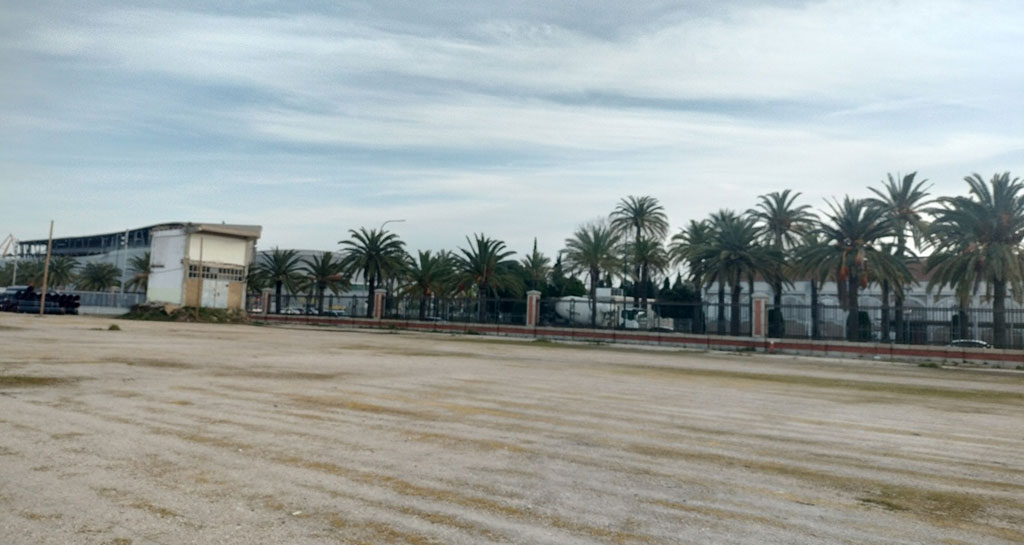
1. Partial demolition of the fishing wharf and exporters’ warehouses
In recent years, Huelva Port Authority has been making a significant effort towards port-city integration. As part of this initiative, a comprehensive refurbishment of the Levante Quay has been proposed. To this end, a number of projects are underway, including the partial demolition of the fishing wharf and the exporters’ premises, and the construction of the new fishing wharf and new warehouses for fish and seafood exporters.
Both the new fishing wharf and the new exporters’ warehouses have now been completed; therefore, the aim of this project is the remaining demolition work, consisting of the partial demolition of the old fishing wharf and the exporters’ premises still standing, in order to continue with the comprehensive redevelopment of the quay.
2. Cold chain network
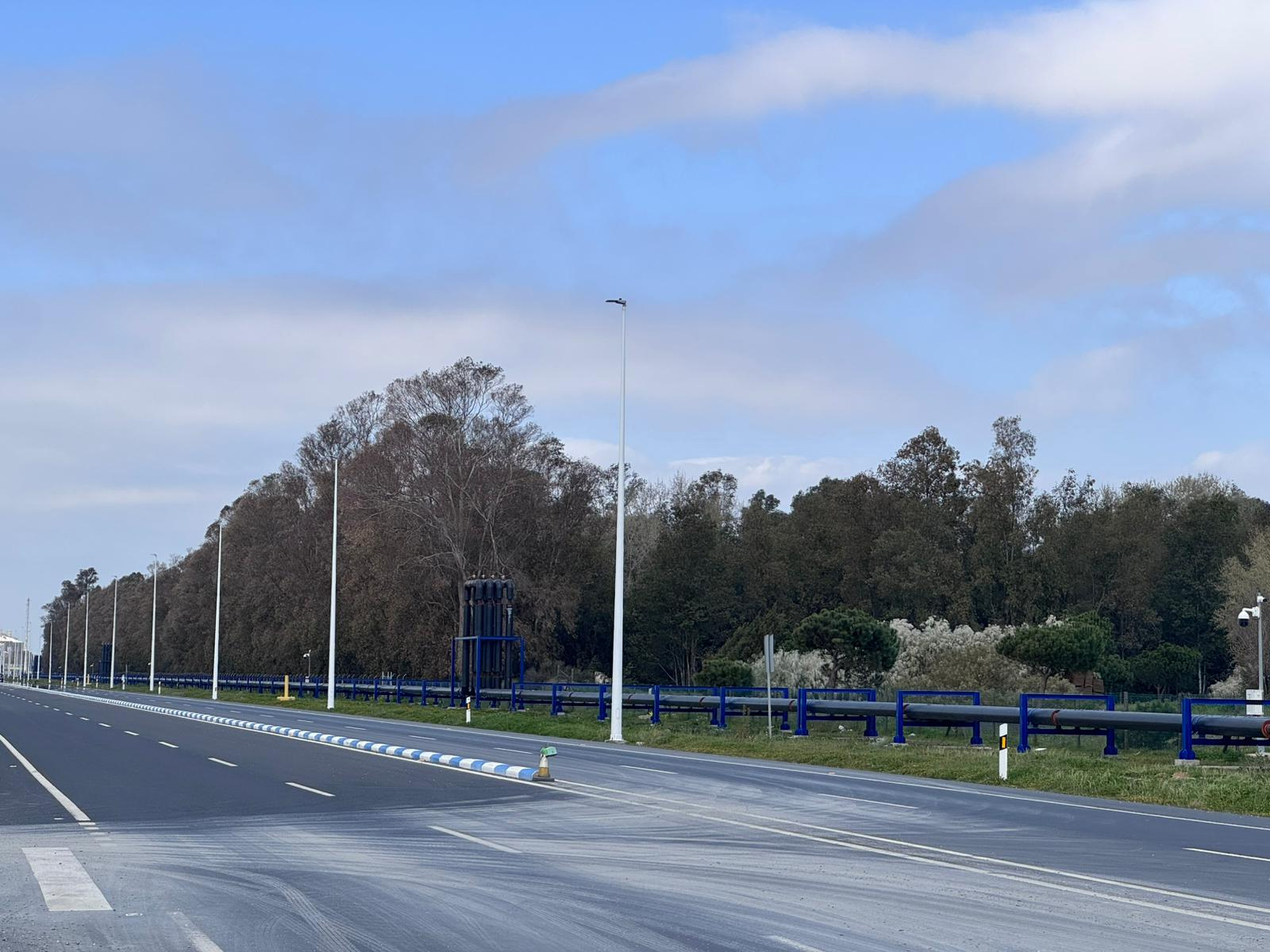
The so-called Port of Huelva Cold Logistics Hub, located at the ‘Muelle Sur’ Multimodal Platform, aims to transform the Huelva site into a centre of excellence in temperature-controlled freight logistics, both in terms of operational efficiency and from the perspective of economic and environmental sustainability—a distinguishing feature with respect to any other facility known to date in Europe.
This economic and environmental sustainability, which is a key distinguishing feature of the Port of Huelva’s Cold Logistics Hub, is driven by the possibility of utilising an eco-friendly, low-cost supply of refrigeration energy derived from the regasification of Liquefied Natural Gas.
For these reasons, the cold pipeline network project is currently being implemented, running from the Enagás Regasification Terminal to its destination at the so-called Cold Logistics Hub located on the South Quay.
This project is funded by the Recovery and Resilience Facility (RRF).
3. Demolition of the former ice factory
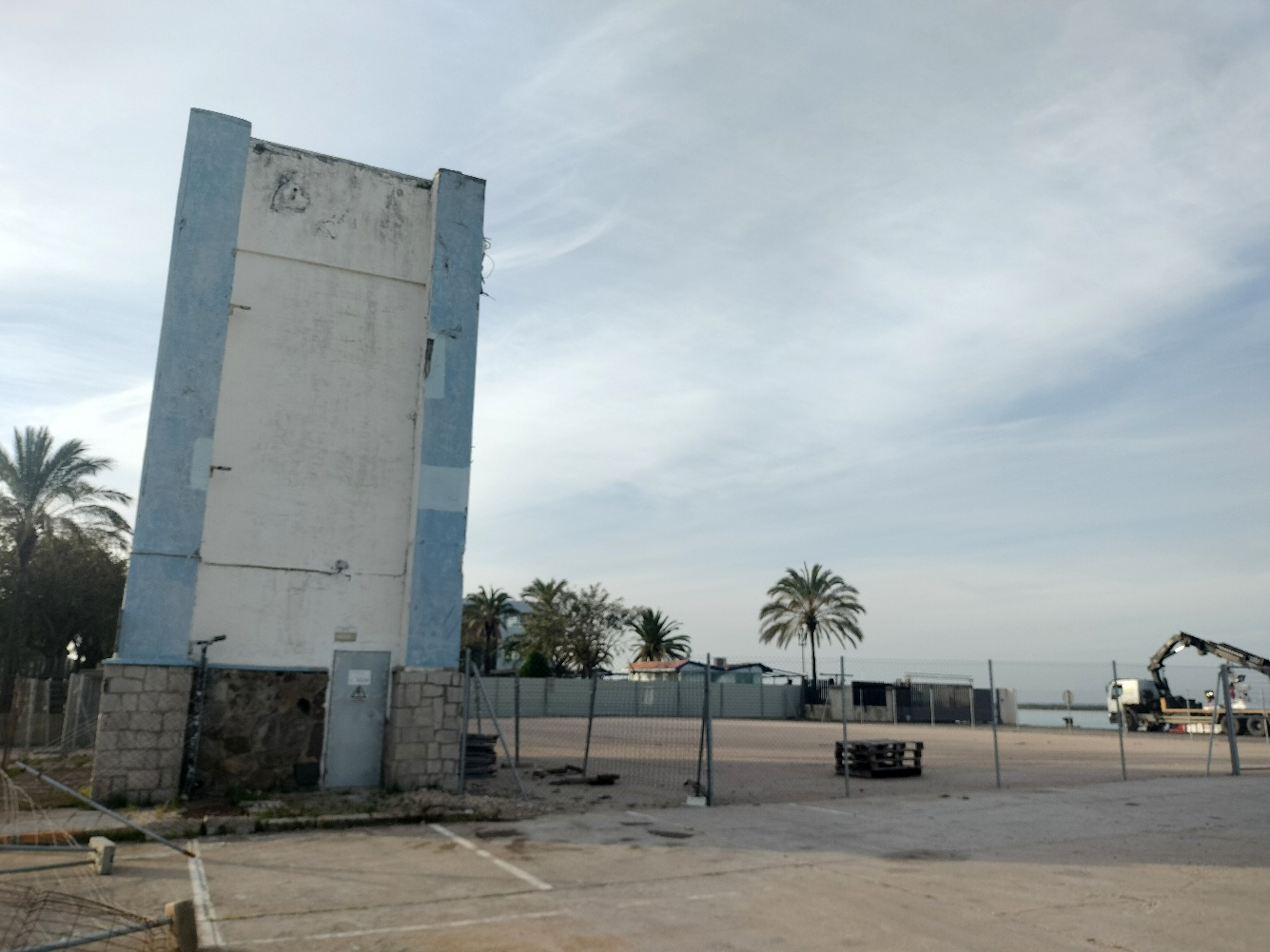
As part of the Port–City initiatives, Huelva Port Authority is carrying out a comprehensive refurbishment of the eastern quay. The first phase involves the demolition of obsolete buildings, including the former building that once housed the facilities of the company Expofrisa (cold stores, offices, ice factory, etc.), which is currently disused and abandoned.
The project therefore involves the complete demolition of the building corresponding to the former Expofrisa facilities.
In addition, the following projects have been started:
- Expansion of the railway terminal
- Dredged materials site No. 4, second phase
- Refurbishment of the former Estihuelva building
1. Expansion of the rail terminal
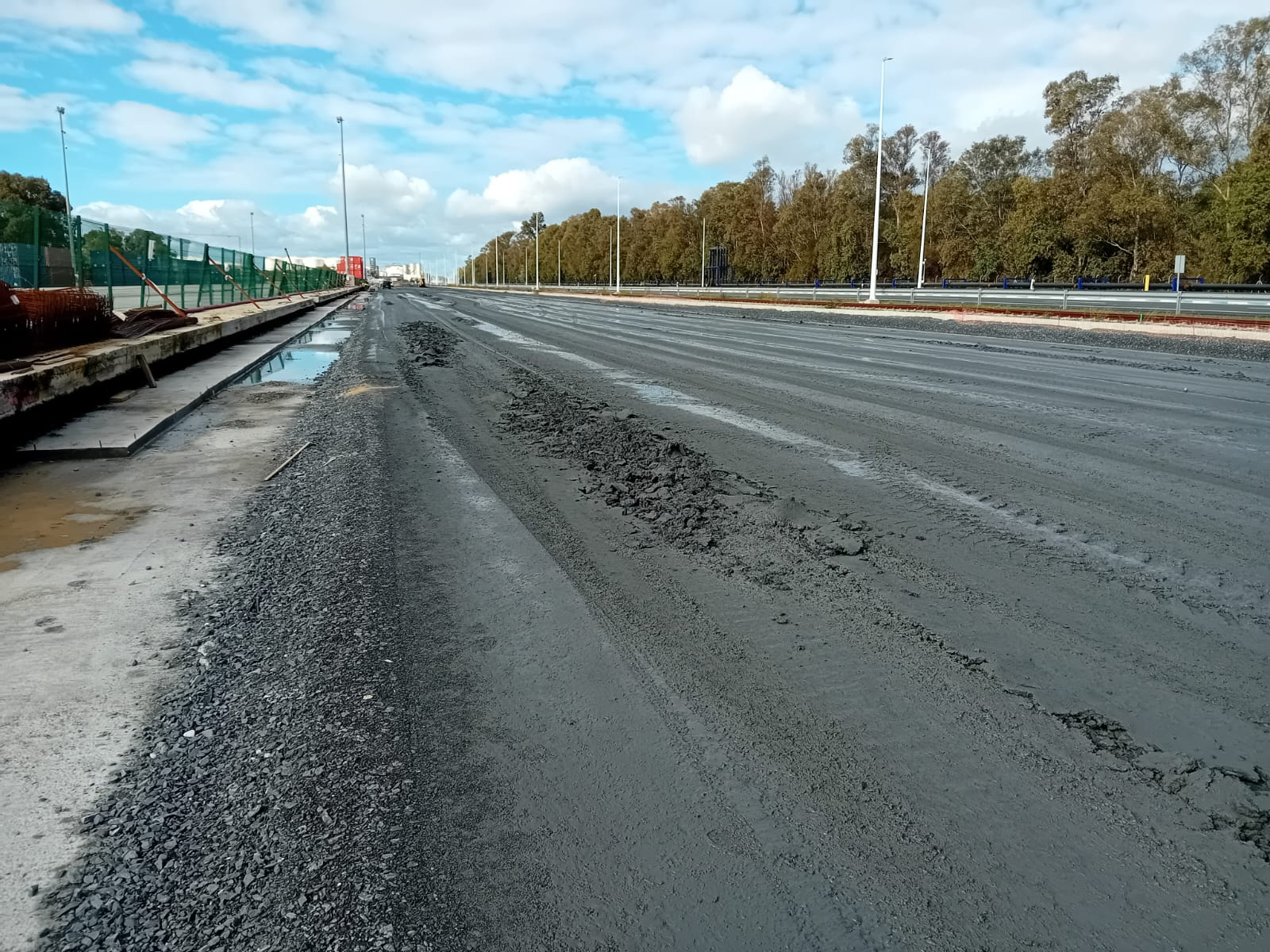
The current multimodal platform at the South Quay ensures maximum connectivity and efficiency in the management of rail traffic with the Mediterranean and Atlantic corridors, as well as with Extremadura, being perfectly synchronised with the Majarabique rail terminal in Seville and the South Quay maritime terminal. Furthermore, this multimodal platform has a direct connection to Extremadura, thus completing the connectivity of this important rail hinterland.
It is adapted for trains 750 m in length and features a double-track design on a slab, connected to the track of Huelva Port Authority’s rail facilities and the main roadways located next to the current Border Inspection Point (BIP).
The increase in rail freight traffic from the port of Huelva to Extremadura, Portugal, Seville, Madrid and Burgos supports the expansion of the current terminal, which will strengthen sea-rail intermodality and sustainable freight transport mobility in and from the region.
This project is funded by the Recovery and Resilience Facility (RRF).
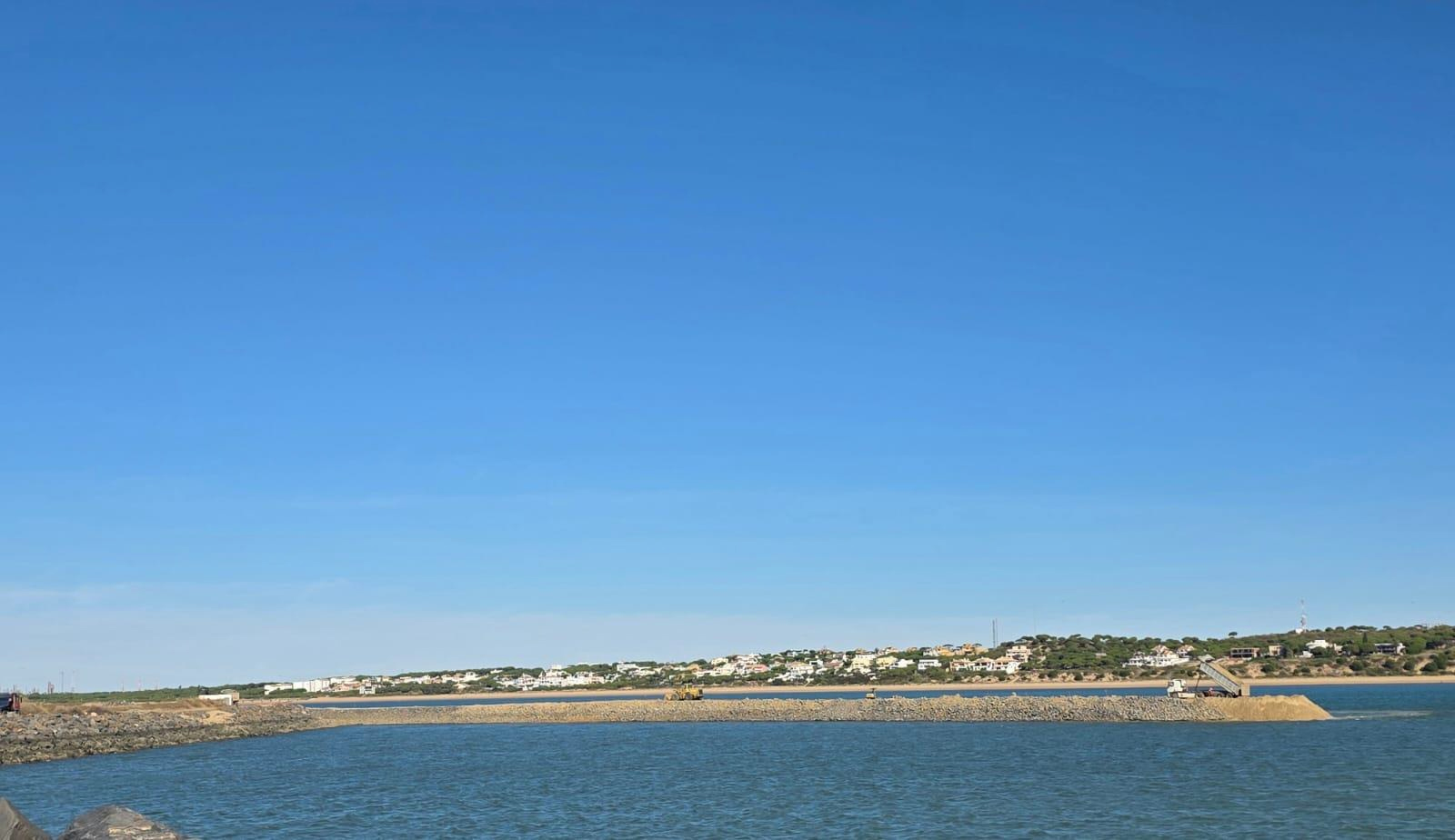
2. Dredged material storage area No. 4, second phase
The storage areas are designed for containing dredged material containing certain concentrations of metals, classified as category C, which prevent its direct discharge into the sea. This is the technique applied internationally and was approved nationally following pilot trials carried out in the Port of Huelva in the 1990s.
Pilot enclosures 1, 2 and 3 are now complete, and enclosure 4 is currently in operation; however, it is expected to reach capacity in the short to medium term, making the construction of a new enclosure necessary.
This project is funded by the Recovery and Resilience Facility (RRF).
3. Refurbishment of the former Estihuelva building
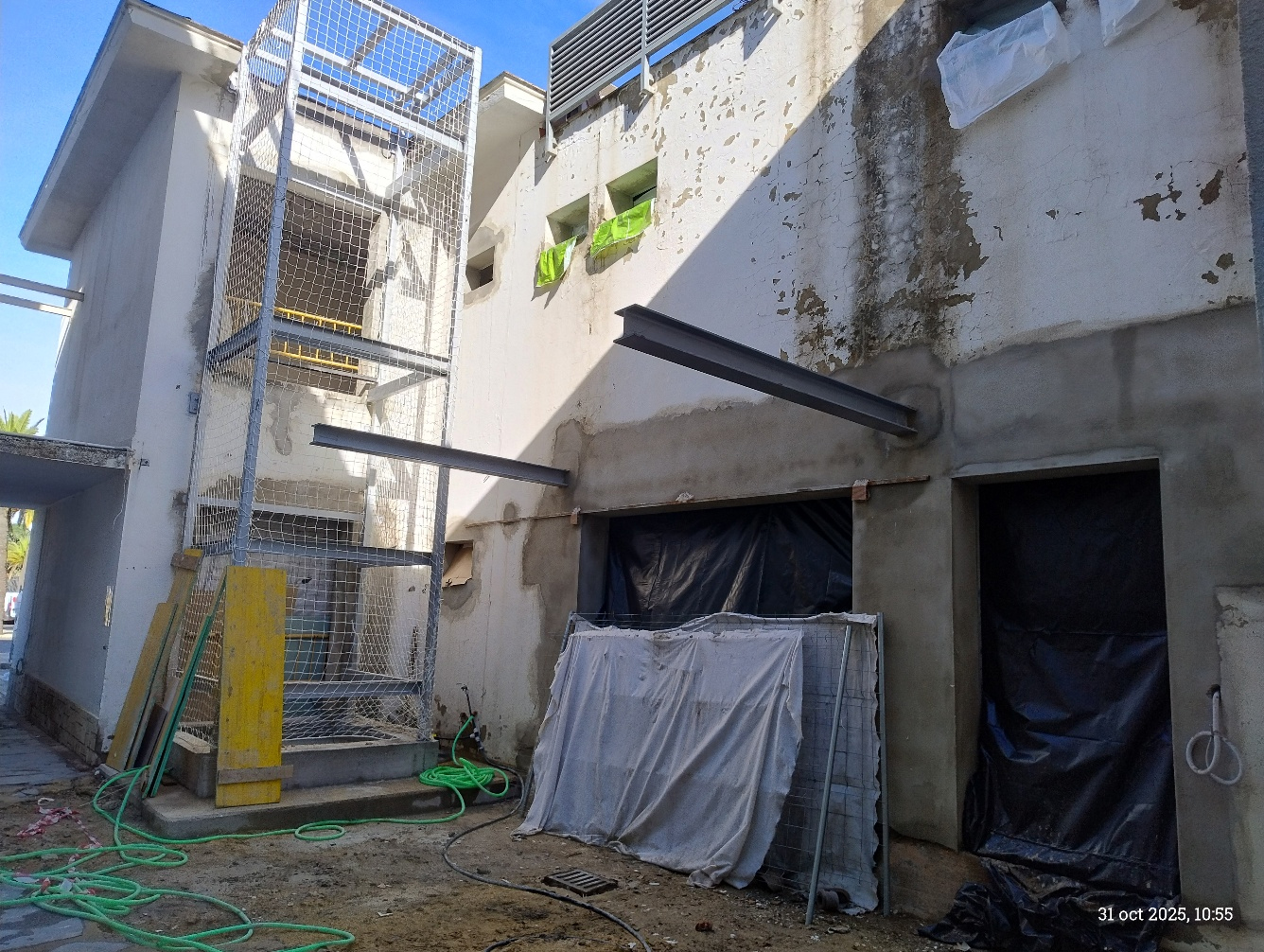
Given the need to expand Huelva Port Authority’s facilities for staff, it was decided to refurbish the former Estihuelva building. The proposal was to convert the ground floor of the Estihuelva building into changing rooms and a briefing area for the port police, and the first floor into offices for Huelva Port Authority.
The aim of the project is to preserve and refurbish as much of the existing structure as possible, maintaining the exterior appearance to enhance the overall appearance of the complex. Inside, the administrative spaces are being renovated to create 21st-century offices: accessible, modern and with refurbished facilities.
Alongside the projects required to implement some of the investments described above, a number of projects were drawn up during 2025, some of which are still underway, including:
- Levante Quay Refurbishment Project
- Project for a Quay for a liquid bulk: terminal south of the Ingeniero Juan Gonzalo Quay
- Hispanoamérica Avenue Car Park and Underground Car Park Project
- South Quay Paving Project
- General Road 2 Rehabilitation Project
Industrial promotion and logistics initiatives (I_09)
The mission and vision expressed in the Port’s Strategic Plan explicitly identify the improvement of the Port’s connectivity and intermodality as a determining factor that has led the Port to focus on its development, especially with regard to rail transport.
The strategic relevance of intermodality in the Port of Huelva is currently based on four key pillars:
- The Majarabique Rail Terminal, located in Seville and owned by Huelva Port Authority.
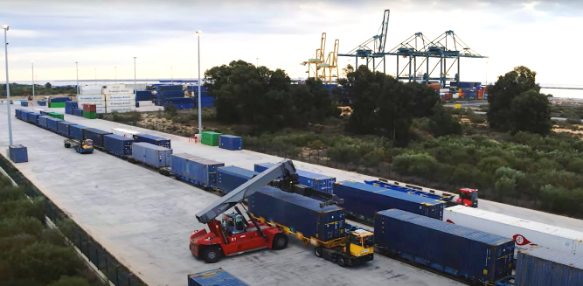
- The South Quay Rail Terminal at the Port of Huelva, co-financed by the CEF (Connecting Europe Facility) programme and offering a direct connection to the container terminal.
- The Logistics Activity Zone, currently in the planning stage, which will bring together different types of businesses and activities to provide continuity, quality services, transformation and added value to the transport chains that converge in the port area.
- The port’s rail infrastructure and connectivity, which will enable more sustainable and efficient access to maritime transport. (See I_22)
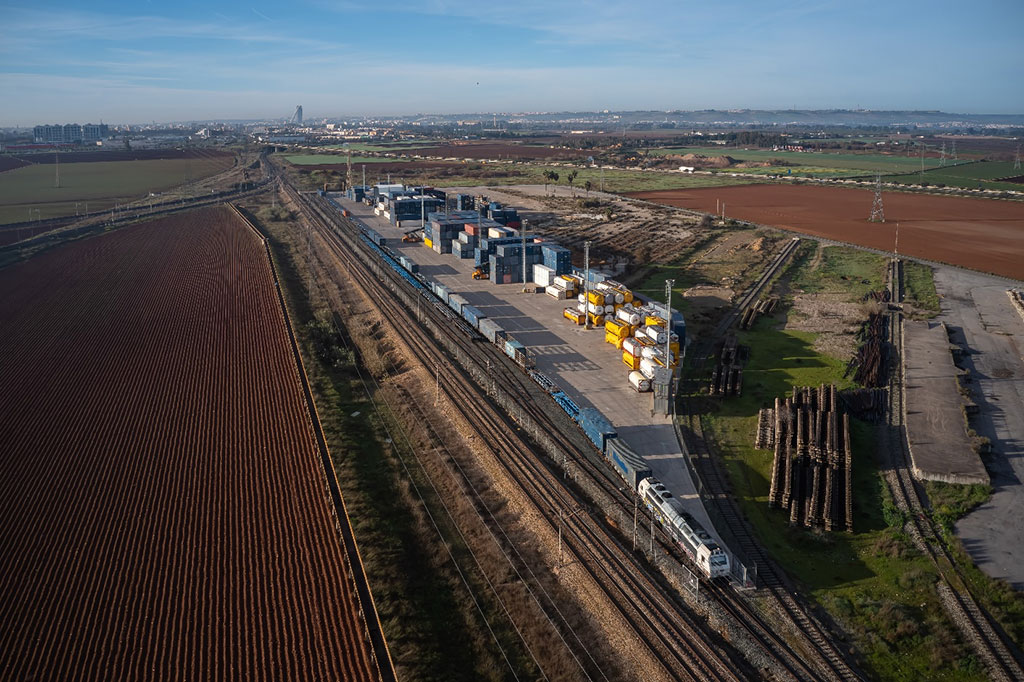
For Huelva Port Authority, the Majarabique Rail Terminal project is integrated with its maritime terminal and is considered a true “extension” of the terminal.
It is situated in the northern part of Seville, within the municipal boundaries of Seville and La Rinconada, adjacent to the SE-20 and SE-40 ring roads and the northern access to Seville, and forms part of the Seville rail hub connecting to Madrid and Extremadura. It thereby enables a direct and efficient rail link between the hinterland of the Port of Huelva—located on the Mediterranean and Atlantic corridors—and Extremadura.
The operation of this rail terminal was awarded through public tender to the company Termisur Eurocargo, S.A., which began operations there in July 2017.
Since then, it has remained a priority for the Port of Huelva to continue consolidating and boosting rail-port traffic for general cargo, particularly for containerised freight on the central axis (Córdoba, Madrid and Zaragoza), originating from or destined for Atlantic ports (the Canary Islands, West Africa, Latin America and north-western Europe, amongst others), achieving optimised times and costs across the entire logistics chain.
The rail investment made by the Port Authority in Majarabique, the South Quay and their connections is resulting in significant growth in rail container traffic, with more than 60 monthly movements between Majarabique and the South Quay of the Port of Huelva and twenty-four monthly movements coming directly from the Madrid hinterland.
Furthermore, in 2025, with a budget of over 7.7 million euros and funded by the European Union through the Recovery, Transformation and Resilience Plan, work begun on the project to expand the South Quay rail terminal to build a third track, thereby enabling the implementation of the Rail Freight Corridor service. A combined transport system that will allow semi-trailers to be loaded directly onto trains, optimising costs and reducing carbon dioxide emissions into the atmosphere.
SOUTH QUAY CONTAINER RAIL CONNECTIONS (Seven per week)
- Four trains per week to Majarabique (Seville)
- Two trains per week to Fuenlabrada (Madrid)
- One train per week to Abroñigal (Madrid)
The Logistics Activity Zone (ZAL) project, which is essential for the future development of the Port of Huelva and its entire catchment area, covers an area of approximately 60 hectares, with potential for expansion, and is located at Punta del Sebo, a site with a distinctly industrial character offering land with utilities and good road and rail links.
The ZAL will occupy a central position between the Port of Huelva and the city centre. This will allow the convergence of different types of businesses and activities that provide continuity, quality services, processing and added value to the transport chains that converge in the port area, as well as promoting job creation, retaining existing traffic and attracting new traffic in the future.
This project is essential for generating added value in Huelva and for boosting the development of the business sector and the creation of stable employment, through a clean processing industry.
The Port of Huelva’s ZAL will optimally serve the most significant and active sectors in the surrounding area, with key sectors for business projects having been identified in specialised logistics activities:
• General logistics
• Agri-food sector.
• Logistics and industrial sector.
• Healthcare Sector.
In 2025, as part of the NEXOMAR project (a project co-funded by the European Union through the INTERREG VI Spain-Portugal Programme (POCTEP) 2021–2027, which will boost maritime logistics activity in the region by enhancing the organisational and technological capabilities of the logistics system in the port areas of Alentejo-Algarve and Andalusia to promote internationalisation and increase the overseas presence of companies in both the logistics sector and manufacturing) and initiatives in collaboration with the Huelva Chamber of Commerce, of which the Port of Huelva is a co-financier, a pilot project was launched to market the ZAL as part of a specific activity dedicated to this project.
In the field of industrial promotion, work continued in 2025 in various working groups with institutions such as AIQBE (Association of Chemical, Basic and Energy Industries of Huelva), with the aim of integrating the industrial and logistics projects of companies within the Port Community into the Port’s planning, as well as promoting the land available in the Service Zone to attract new investment.